Skip to the floor
BC Hip Hop

Breaking floors and cypher gear for crews in British Columbia

Order a floor

Practice floors

Breaking floors

Three floors, one job: a surface that spins, slides and stays put on park concrete, a garage slab or a community hall. Here is the full detail on each one: size, surface, weight and price.

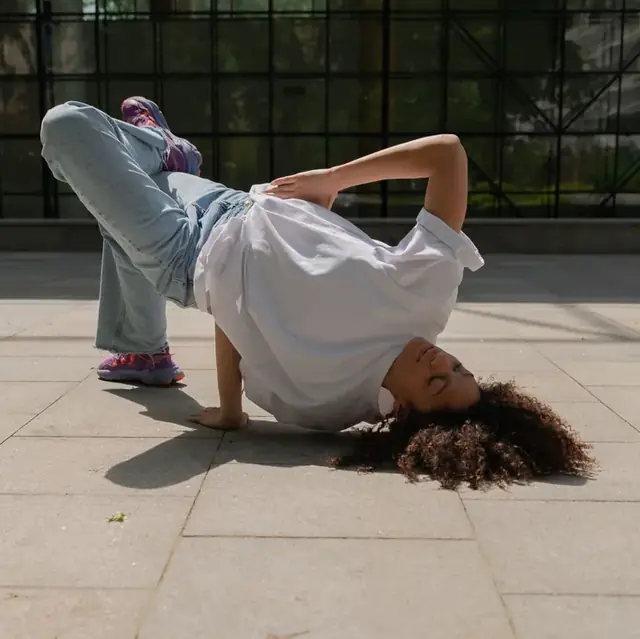
A b-girl holding a freeze on smooth paving, one hand down and her legs folded in the air

For power moves

Roll-out breaking floor, 2 × 2 m

C$189

One sheet of dance vinyl, two metres each way, with nothing to catch a spin. It is the floor we would hand to anyone learning windmills, flares or backspins, and the one a crew of up to five takes turns on. Roll it out, give it a few minutes to settle and it stays where you put it.

Size
2 × 2 m in one piece: 4 m² of floor.
Surface
Matte dance vinyl, 2 mm thick. A fast top for spins and slides; a textured underside that holds on smooth concrete and hall floors.
Weight
About 9 kg.
Rolled
A tube 2 m long and about 15 cm across. Store it rolled, never folded.
Marking
Midnight top with a tape-yellow centre cross, so you know where the middle is mid-spin.
Best for
Windmills, flares, backspins and headspins, with one dancer going down at a time.

Order this floorPlan it first

2 m2 mrolled

Drawn from above. The dotted ring is the two-metre sweep of a windmill; the dark bar is the same floor rolled up.
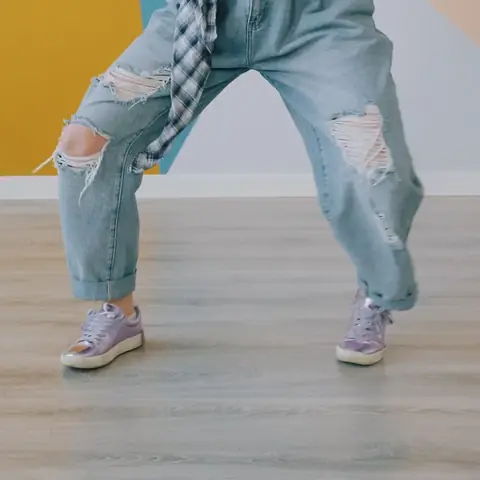

Two feet in silver sneakers mid-step on a pale smooth floor, a yellow wall panel behind

For footwork

Interlocking floor panels, pack of 4

C$149

Four rigid panels with puzzle-cut edges that click together by hand. Laid as a square they give you a metre and a half each way for six-steps, sweeps and freezes; laid end to end they make a three-metre line for toprock drills. When you are done they stack flat and slide behind a door or under a bed.

Size
Four panels, 75 × 75 cm each. Clicked into a square: 1.5 × 1.5 m.
Layouts
A 3 m × 75 cm line from one pack. Two packs make 1.5 × 3 m; four packs make 3 × 3 m.
Surface
A hard vinyl face laminated onto a 10 mm rigid board. Quicker underfoot than the roll-out and firm under a heel.
Weight
About 2.5 kg a panel, 10 kg the pack.
Packed
A 75 cm stack about 4 cm deep, with a webbing carry strap.
Best for
Footwork, toprock and freezes in bedrooms, basements and small halls.
Not for
Windmills and backspins: a spinning back crosses the joins.

Order a packPlan it first

1.5 m75 cm3 mthe same four, laid as a line

Drawn from above at the same scale as the roll-out. The loose panel shows how the puzzle edge clicks in.

Dancers seen from above through leaves, one in a black cap throwing an arm up in the middle of the group

For the whole crew

Cypher circle floor, 3 m

C$329

A cypher makes its own shape: one dancer in the middle and everyone else in a ring about three metres across. This floor is that ring. It arrives as two half-circles of the same vinyl as the roll-out; butt the straight edges together, run the seam tape down the join and the whole crew has one floor.

Size
3 m across. A circle that wide is a touch over 7 m² of floor, by the usual π × radius × radius.
Supplied as
Two half-circles and a roll of seam tape.
Surface
The same 2 mm matte dance vinyl as the roll-out floor.
Weight
About 16 kg in all: two rolls of roughly 8 kg.
Rolled
Two tubes, each 1.5 m long.
Best for
A crew of 6 to 10, with one in the middle and the rest round the edge.

Order the circleStart a Rocket Pool

3 mtwo rolls

Drawn from above: one dancer in the middle, eight round the edge, and the taped seam between the two halves.

Side by side

The three floors compared

All prices are in Canadian dollars. Original Delivery is added once per order, by province; the shipping page has the table.

FloorRoll-out floorPanel packCypher circle
Laid size2 × 2 m1.5 × 1.5 m3 m across
Floor area4 m²2.25 m²about 7 m²
PiecesOneFourTwo
JoinsNoneTwo, crossing in the middleOne, taped flat
WeightAbout 9 kgAbout 10 kgAbout 16 kg
Carried asOne 2 m rollA flat 75 cm stackTwo 1.5 m rolls
Best forPower movesFootwork and freezesA crew of 6 to 10
PriceC$189C$149C$329

What you are dancing on

The surface, in plain words

Fast is not the same as slippery. A good breaking floor lets cloth and skin slide, so a backspin keeps turning, while rubber soles still bite, so toprock does not skate out from under you. The matte top on our vinyl is chosen for that balance. It is the kind of surface dance studios lay wall to wall, cut to sizes a crew can carry.

The underside matters as much. It is lightly textured, so the sheet holds on smooth concrete, sealed wood or a hall floor with no glue and no pegs. That grip depends on a clean base: a floor laid over grit rides on the grit.

Vinyl stiffens in the cold. On a January morning, unroll it indoors first or let it sit in the sun for ten minutes, and it relaxes flat. In July, do not leave it rolled in a parked car in full sun; heat sets a curl into the roll that takes a day to drop out.

And be clear about what these floors are not. They are not sprung and they are not padded. A dance surface a few millimetres thick passes on whatever is underneath it, so lay yours on ground that is flat and firm.

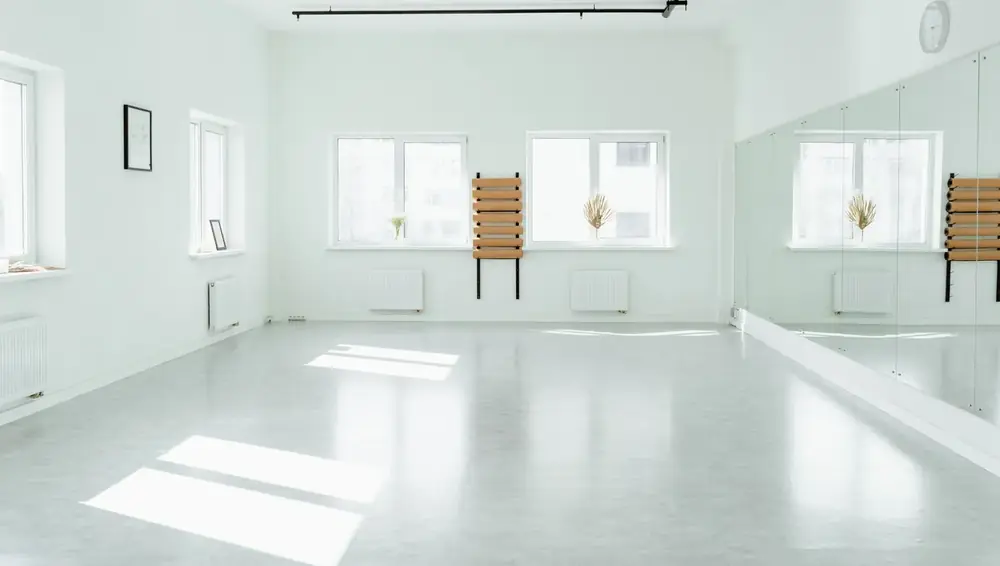
A bright empty studio with a pale, smooth dance floor and sunlight across it
The look to aim for: a clean, matte floor with daylight sliding across it.

Six steps, no tools

Laying it down

  1. Sweep the base

    A broom or a hand brush will do. One small stone under the sheet leaves a dimple you will find with an elbow.

  2. Unroll it top side up

    The top is the smooth matte face; the underside carries the texture. Start at one edge and walk the roll out.

  3. Let it relax

    Give it a few minutes. A corner that lifts goes flat if you roll that end back on itself the other way for a moment.

  4. Tape what needs taping

    The roll-out needs none. For the cypher circle, butt the straight edges together and run the seam tape down the join in one pull. Panels click; no tape.

  5. Walk the edge

    Go round once. If an edge sits on a crack or a drain cover, shift the floor before the session, not during it.

  6. Roll it up after

    Wipe off the dust, roll it top side out so the edges curl down next time, and carry it home dry.

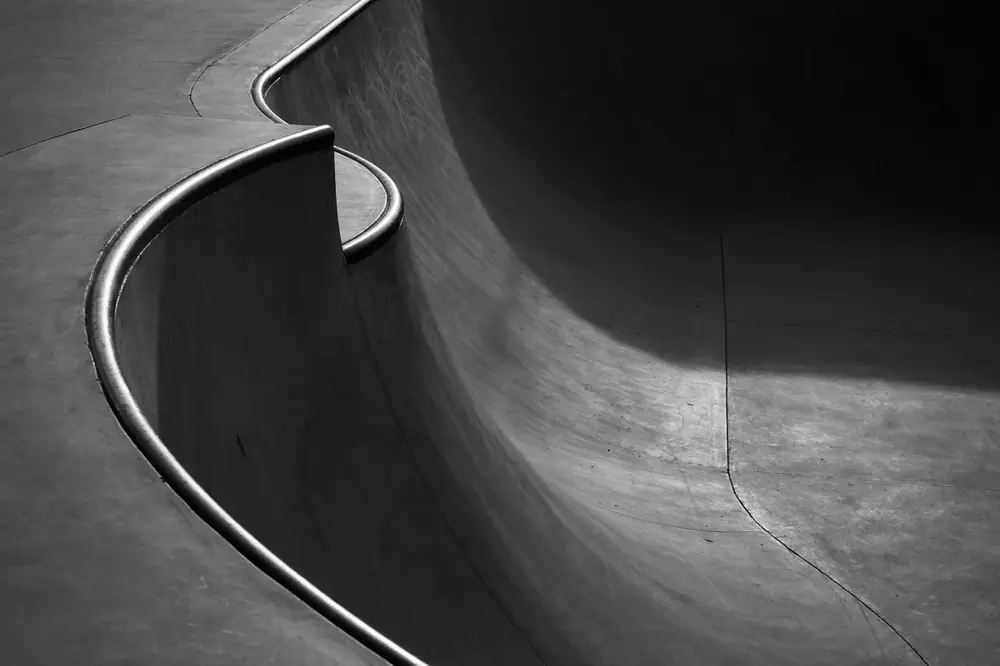
Smooth curved concrete in a skate bowl, photographed in black and white
Smooth, dry, swept concrete: the best base there is.

Next step

Not sure which one fits?

The floor planner takes your crew size and your space and names the floor. Or head straight for the order form; you pay nothing before your figure is in front of you.

Plan your floorOrder a floor